
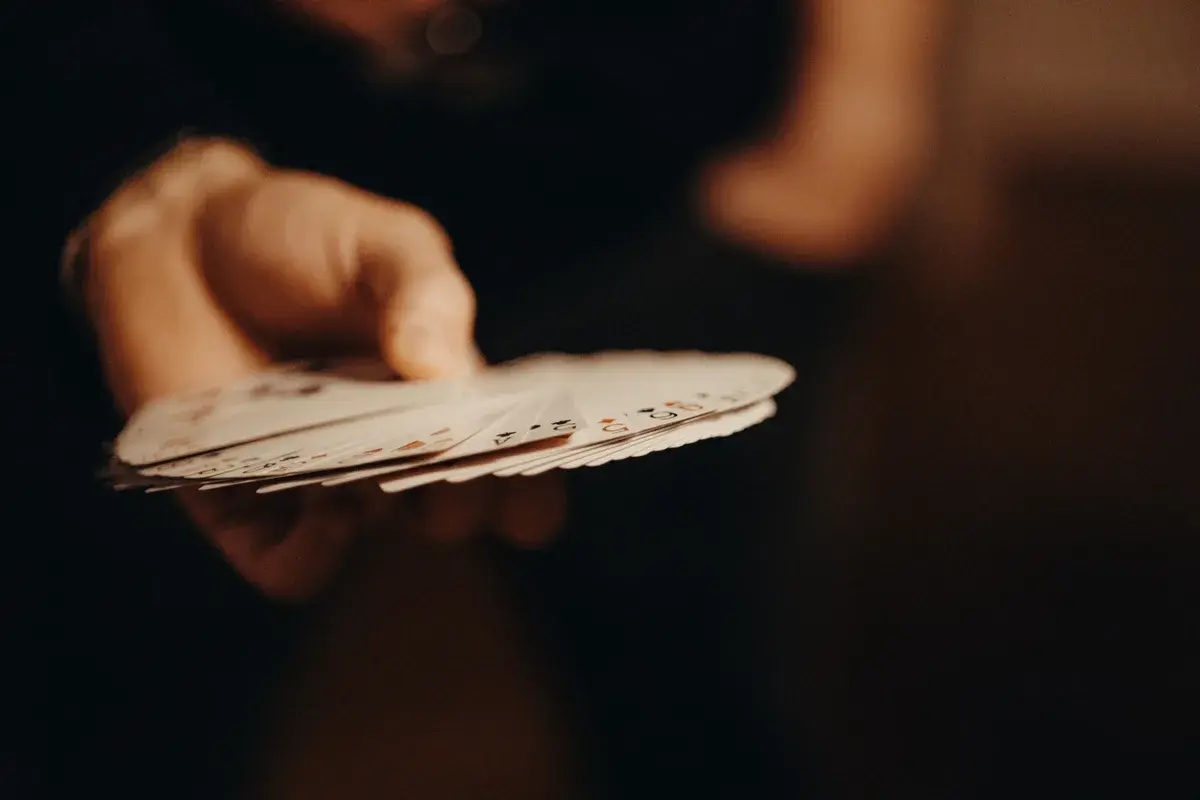
Event Entertainment in Berlin: Which Format Fits When
Close-up as a walking act, a stage show, mentalism or hosting – the choice decides the impact. How to pick the right format by occasion, guest count and schedule, when an icebreaker matters and which mistakes to avoid.
Event entertainment in Berlin works best when the format fits the occasion, the guest count and the schedule. Close-up table magic as a walking act is the most flexible icebreaker for receptions and waiting times; a stage show sets a shared highlight after dinner; mentalism suits attentive, smaller groups; and hosting holds a longer programme together. The key is not to book as much as possible, but to place the right format at the right moment in the schedule.
Event entertainment in Berlin: what matters
Event entertainment is not an end in itself. It should fulfil a concrete task in the schedule – welcoming guests, bridging waiting time, setting a highlight or holding a long programme together. Whether an event stays in memory rarely comes down to the number of acts, but to whether the chosen format fits the occasion, the guest count and the schedule.
In Berlin the offering is wide, from the industrial hall to the hotel ballroom, from the product launch to the Christmas party. That is exactly why it pays to first answer what the entertainment should achieve – and only then which format fulfils that task best. Anyone who reverses this and books whatever is available risks a good act falling flat at the wrong time in the wrong place.
- Task first: what should the entertainment achieve in the schedule?
- Format second: which format fulfils exactly that task?
- Less is more: two to three coherent elements instead of an overloaded programme
The main formats at a glance
Four formats cover most events. They can be used on their own or combined – the important thing is to know each one’s strength.
Close-up table magic as a walking act is the most flexible form. The artist moves freely through the room, from table to table or from standing group to standing group, needs neither stage nor technology and adapts to the schedule. A stage show of 20 to 30 minutes reverses this: it brings all guests together in one place and sets a clear, shared highlight. Mentalism works with thoughts, predictions and apparent mind-reading – it is especially effective with attentive, smaller groups who engage with what is happening. Hosting, finally, is not a show segment of its own but the common thread: it guides through long evenings, announces programme points and keeps the energy up between acts.
- Close-up / table magic (walking act): flexible, no stage, ideal for receptions and waiting times
- Stage show: a shared highlight for everyone, needs space and a quiet moment
- Mentalism: for attentive, smaller groups who engage
- Hosting: the common thread for long programmes and galas
How to choose the right format
Three questions almost always lead to the right format. First, the occasion: a product launch needs something different from a lively Christmas party. Second, the guest count: what works for 30 people gets lost among 300 – and the other way round. Third, the schedule: is there a quiet moment for a stage show, or do guests stand at high tables all evening?
As a rule of thumb: the more dispersed and talkative the audience, the more a walking act fits. The clearer the quiet moment when everyone comes together, the more a stage show fits. Mentalism works where guests bring time and attention; hosting pays off as soon as the programme consists of several parts that someone needs to connect.
- Occasion: casual or formal, internal or with clients?
- Guest count: small group, mid-sized crowd or large audience?
- Schedule: is there a quiet moment for the stage or not?
Occasion, format and best timing
Which format suits which occasion and when it works in the schedule – as a rough orientation.
| Occasion | Recommended format | Best timing |
|---|---|---|
| Reception / get-together | Close-up as a walking act | as guests arrive |
| Corporate party | Walking act + short stage show | walking act at the reception, stage after dinner |
| Gala / large audience | Stage show + hosting | as the highlight after the main course |
| Product launch | Mentalism or a tailored act | around the product reveal |
| Dinner | Table magic between courses | once the plates are cleared |
| Trade fair / booth event | Walking act at the booth | during the busy hours of the fair |
Icebreaker: when entertainment connects
The most critical phase of almost any event is the beginning. Guests arrive in waves, sometimes do not know each other and stay in familiar little groups at first. A good icebreaker format dissolves this initial stiffness before it sets in – and that rarely succeeds from up on a stage.
Close-up table magic as a walking act is especially suited to this, because it works without announcement and the artist moves freely. When something inexplicable suddenly happens at a high table, two people from different departments are suddenly talking about the same experience instead of the weather. That is the real value: the entertainment gives guests a reason to talk to each other. A stage show does not deliver this in that early phase – it only works once all guests have arrived and settled down.
- Start early: in the first half hour, while the mood is still reserved
- Low barrier: no stage, no announcement, no obligation
- Create a reason: a shared experience guests can talk about
Timing: placing entertainment correctly in the schedule
Even the best format falls flat at the wrong time. The walking act belongs in the phases where people are talking and standing anyway – reception, breaks, waiting times between programme points. During the main meal, by contrast, guests focus on their plates and table conversation; this time is better kept free of entertainment.
The stage show needs its own quiet moment, usually after the main course, when everyone has arrived and is full. Two highlights should never compete: a show running alongside the management speech or the first dance weakens both. Also plan a buffer – events almost always shift, and a good artist responds flexibly rather than working through a rigid plan.
- Walking act: reception, breaks, waiting times – never during the main meal
- Stage show: after the main course, when everyone has arrived and is full
- No two highlights at once: a show should not run alongside speeches or dancing
- Plan a buffer: events shift, so the programme should stay flexible
Common mistakes when choosing – and how to avoid them
- A format without a task: an act is booked without it being clear what it should achieve
- The wrong size: intimate mentalism for 300 guests or a big stage for 20 people
- A stage without a quiet moment: the show runs while guests keep talking at high tables
- Too much at once: three competing acts instead of two coherent elements
- The wrong timing: a walking act during the meal, a stage during the arrival phase
- Booked too late: sought-after dates in summer and December are taken early
Frequently asked questions about event entertainment in Berlin
Which formats of event entertainment are there?
The main formats are close-up table magic as a walking act, a stage show, mentalism and hosting. The walking act is flexible and needs no stage, the stage show sets a shared highlight, mentalism works with attentive smaller groups and hosting holds long programmes together.
Which format suits my event?
That depends on three things: the occasion, the guest count and the schedule. The more dispersed and talkative the audience, the more a walking act fits. The clearer the quiet moment when everyone comes together, the more a stage show fits. Tell me briefly about your event and I’ll recommend the right format.
What is the difference between a walking act and a stage show?
A walking act comes to the guests, moves freely through the room and needs no stage – ideal for receptions and waiting times. A stage show brings all guests together in one place and sets a clear, shared highlight, usually after dinner. Many events combine both.
When should the entertainment take place in the schedule?
The walking act fits the reception, breaks and waiting times, never during the main meal. The stage show needs its own quiet moment, usually after the main course, when everyone has arrived and is full. Two highlights such as a show and a speech should never run at the same time.
What does event entertainment in Berlin cost?
Table magic starts at around 500 euros per hour, a stage show from 1,200 euros. The price depends on duration, guest count and format. A transparent overview of the pricing factors can be found on the prices page.
How far in advance should you enquire about event entertainment?
For most events, an enquiry a few weeks in advance is enough, and short-notice dates are often still possible. Only for very popular dates in summer and December is it worth securing the right format earlier. Better to ask once too often than not at all.
Related pages & articles
Find the right format for your event
Tell me briefly about your event – I’ll recommend the right format and send a no-obligation quote, usually within 24 hours.
Check availability